


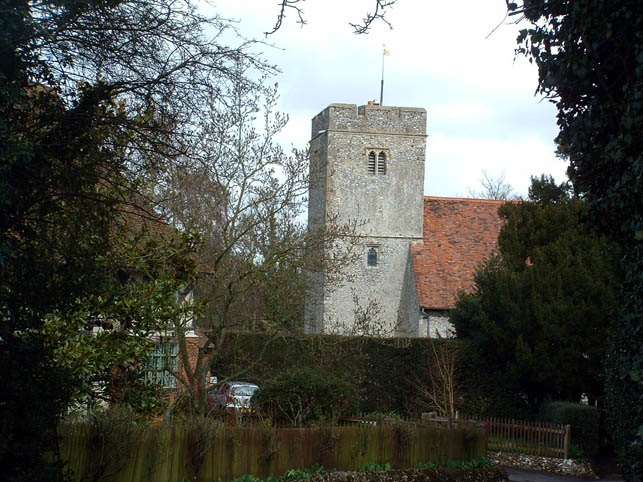
Photo: Richard C Offen, Mar 2006
Details of the Bells
| Bell | Weight (most recent) |
Diameter | Note | Date | Founder | Canons | Retuned | ||
|---|---|---|---|---|---|---|---|---|---|
| ꓕ | 1 | 3½ cwt approx. | 25⅛" | C♯ | 1730 | Richard Phelps, Whitechapel | Conventional | 1999 Whitechapel | |
| ꓕ | 2 | 5 cwt approx. | 27⅝" | D♯ | Unknown | Conventional | Never | ||
| ꓕ | 3 | 6 cwt approx. | 30¾" | F♯ | William Chamberlain | Conventional | Never |
ꓕ- Hung dead
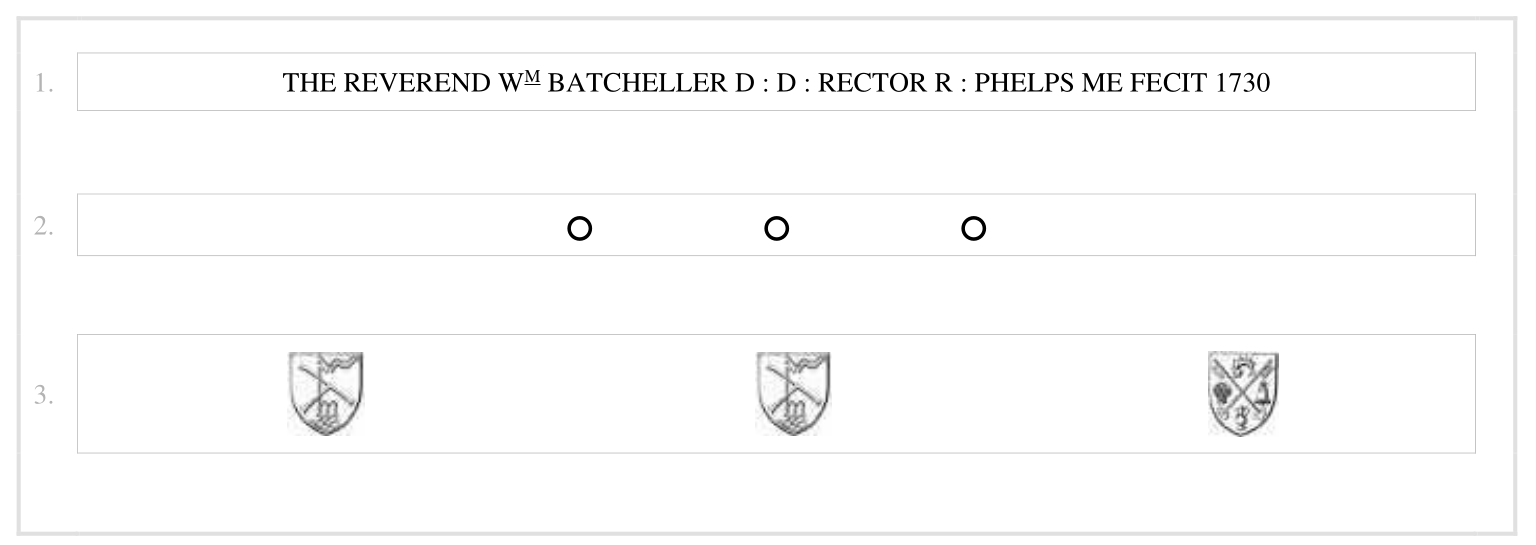
Inscriptions on the Bells
History
| c1350 | 14th Cent. | Middle bell cast by an unknown founder. | |
| c1440 | Tenor cast by William Chamberlain. | ||
| 1730 | Treble cast (or recast) by Richard Phelps. | ||
| 1798 | Hasted noted 3 bells in the tower. [1] | ||
| 1887 | Stahlschmidt notes the 3 bells. He (mistakenly) ascribes the 2nd and tenor to Henry Jordan. | ||
| 1991 | Whitechapel quoted for rehanging for either swing or stationary chiming. | ||
| 1998 | Whitechapel re-quoted and added an estimate for a basic restoration for ringing order. Nick Davies, then the Diocesan Consultant sought in vain to persuade the PCC to adopt this course. | ||
| ❸→③ | 1999 | Bells rehung by Whitechapel with new fittings for stationary chiming in the existing frame. |
| [1] | The church, which is dedicated to St. Mary and the Holy Cross is but small, and consists of one isle and one chancel, with a low square tower at the west end of it, in which hang three bells.' ('The History and Topographical Survey of the County of Kent. Vol 6.', Edward Hasted) |
Page updated: 30 March 2020