


Details of the Bells
| Bell | Weight (most recent) |
Diameter | Note | Date | Founder | Canons | Retuned | ||
|---|---|---|---|---|---|---|---|---|---|
| ® | Treble | 6 cwt approx. | 31" | E♭ | 1802 | Thomas Mears I, Whitechapel | Conventional | Never | |
| ® | 2 | 6½ cwt approx | 32" | D | 1802 | Thomas Mears I, Whitechapel | Conventional | Never | |
| ® | 3 | 7½ cwt approx | 33½" | C | 1802 | Thomas Mears I, Whitechapel | Conventional | Never | |
| ® | 4 | 8¾ cwt approx | 36½" | B♭ | 1802 | Thomas Mears I, Whitechapel | Conventional | Never | |
| ® | 5 | 10½ cwt approx | 39½" | A♭ | 1802 | Thomas Mears I, Whitechapel | Conventional | Never | |
| ® | 6 | 12 cwt approx. | 41" | G | 1802 | Thomas Mears I, Whitechapel | Conventional | Never | |
| ® | 7 | 15 cwt approx. | 45" | F | 1802 | Thomas Mears I, Whitechapel | Conventional | Never | |
| ® | Tenor | 22 cwt approx. | 50" | E♭ | 1802 | Thomas Mears I, Whitechapel | Conventional | Never |
® - Hung for full circle ringing
Bellframes
| Frame | Bells | Year | Maker | Material | Truss(es) | Local Layout |
|
|---|---|---|---|---|---|---|---|
| 1 | All bells | 1803 | Thomas Sweetlove, Leeds | Oak | 6.D

|
8.3

|
Inscriptions on the Bells

Prior to 1802
| Bell | Date | Founder | Fate | |
|---|---|---|---|---|
| Treble | Unknown | Recast 1802 | ||
| 2nd | Unknown | Recast 1802 | ||
| 3rd | Unknown | Recast 1802 | ||
| 4th | Unknown | Recast 1802 | ||
| 5th | Unknown | Recast 1802 | ||
| Tenor | Unknown | Recast 1802 |
History
| 1798 | Record of 6 bells in the tower. [1] | ||
| New ❽ | 1802 | A new ring of 8 cast by Thomas Mears from the metal of the old 6. They arrived in March the following year and hung in a new frame constructed by Thomas Sweetlove of Leeds. [2] | |
| 1885 | The bells were rehung with new gudgeons, wheels and bearings, and 6 were quarter turned by Samuel Snelling of Sittingbourne. His bearings are still there and are possibly the last suriving examples of his work on change ringing bells. The old clock (date 1615) was replaced by Smith & Sons of Clerkenwell. [3] [4] [5] [6] |
| [1] | The church, which is dedicated to St. Peter and St. Paul, is a handsome building, consisting of three isles and three chancels, with a square tower at the west end of it, in which there is a clock, and six bells. It is built mostly of flint, but as a mark of its antiquity, it has a Roman brick or two interspersed among them, and the mortar is composed of cockle-shells. What is very remarkable, in the steeple there are the remains of a chimney, which seems coeval with it. The door-case on the western side of the steeple is of Saxon architecture, with zigzag ornaments, as is that on the opposite or inner side, but of a much larger size.' ('The History and Topographical Survey of the County of Kent: Volume 6, Edward Hasted, 1798) |
| [2] | The nineteenth century saw great changes in the appearance of the interior of the church and in the way in which services were conducted. Some of these innovations did not meet with the approval of the congregation, but the decision to recast the bells in 1802 would have been supported by all, expensive as it was. Borden had a strong ringing tradition. The Vestry met at the Maypole, in February, and agreed that the six bells should be recast as a peal of eight, hung in a new frame. The finance was to be raised in a numbers of ways. Mr Robert Matson, who then resided at Borden Hall, offered to give a sum equal “to what an assessment on the tithes would produce, supposing they were assessable”. No time was lost, for two weeks later the Vestry again adjourned from the church to reconvene in the convivial atmosphere of the Maypole to discuss with the London bell-founder, Mr Mears, the details of the casting and with Mr Sweetlove, the new frame. Mears, of the Whitechapel Bellfoundry where, fifty years later, the bells of Big Ben were cast, was to make “a good and musical peal of 8 at 4d. a pound and to find 8 new clappers at 10d. a pound.” He would allow 13d. a pound for the old metal if it should exceed the new, but be paid 17d. per pound if the new were to exceed the weight of the old. The founder himself would pay the costs of transporting to London by boat up the Swale and Thames. He would even allow money on the old clappers. A hundred pounds, which was half the agreed likely cost, would be paid when the bells were hung and then another instalment six months after and the final £30 one year after completion, with the bells insured by Mr Mears for that year. Doubtless feeling that they had struck a hard bargain, the Churchwardens and Overseers could then agree terms with Mr Sweetlove for making, supplying and erecting a frame of well-seasoned English oak. Sweetlove helped to take the bells down and he hung one bell for the temporary use of the parish. His charges amounted to £120 to be paid in instalments. It can be seen that all this amounded to a major outlay of parish funds and one which could not have been embarked upon without the fullest possible support. In August, 1802, William Wise, then one of the churchwardens, paid John Greensted 14/- for carrying the bells to Milton Quay in his cart. The following March, Greensted went to fetch the new ones. The Leeds ringers came and played the opening rounds or changes a week later. It was then decided there should be three official ringing days in the year, namely, the birthdays of the King, the Queen and the Prince of Wales. If there were to be a coronation, then that too would be celebrated by the bells. On each occasion, it was resolved, a total of eight shillings would be paid to the ringers.' ('A local history (tba)) |
| [3] | Borden Church Bells. TO THE PARISHIONERS AND OTHERS. The Vicar and Churchwardens are very desirous of raising a sufficient sum of money to put this very fine peal of BELLS in thorough repair. To effect this purpose, a sum of about £60 will be required. Contributions will be thankfully received by T, W, COLLARD, A. TIDY, } Churchwardens. Borden, April, 1885' ('East Kent Gazette, Sat 25 Apr 1885) |
| [4] | BORDEN BELLS.- This celebrated ring of eight bells is now in the hands of Mr. Snelling, church bell-hanger of Sittingbourne. They were cast at Whitechapel by one of the Mears's in 1802, a ring of six having been exchanged, as an inscription on the tenor remarks. Prior to this century, a bell founder resided in the parish, Willner by name, whose bells still exist in many parishes in Kent and Surrey; he cast the Milton market and clock bell at present in the Assembly Room. The bell cage at Borden was the work of Mr. Sweetlove, and is a remarkable piece of carpentry, requiring no iron bolts, nor has it a single upright timber between the top and bottom rails. The tenor bell weighs over 21 cwt., and is fashioned on different curves to the tenor at Sittingbourne, which is of like weight, and from the same foundry more than a century before.' ('Bromley Journal and West Kent Herald, Thurs 21 May 1885) |
| [5] | It may be mentioned that the eight bells at Borden have recently been rehung and put into good condition by Mr. S. Snelling, of Sittingbourne, and the opening peal (5040 grandsire triples, in 3 hours 17 minutes) was rung upon them on the previous day by a band from the St. Michael's Change Ringing Society, Sittingbourne.' ('Faversham Times and Mercury and North-East Kent Journal, Sat 20 June1885) |
| [6] | Borden Church Bells Fund. The Churchwardens desire to offer their best thanks to the Subscribers to the above fund. [There then follows a full list of names, headed by the church collection, then the Rev F E Tuke, then the rest of the list, with surnames familiar to ringers in the area today.]' ('East Kent Gazette - Sat 6 Mar 1886) |
Videos
Part of a peal of Bristol S Major rung on 11 May 2026. Internal footage (Dickon Love) and external (Lee Small).
The Belfry

The tenor.
Photo: Christopher J Cooper

The belfry.
Photo: Christopher J Cooper

One of the stamped Snelling bearings (they are all set in Plummer blocks and the brasses are all stamped thus).
Photo: Christopher J Cooper, 2017

Treble (quarter turned with new headstock, straps, gudgeons and bearings supplied & fitted by Snelling).
Photo: Christopher J Cooper, 2017

Second (quarter turned with new headstock, straps, gudgeons and bearings supplied & fitted by Snelling)
Photo: Christopher J Cooper, 2017

Third (quarter turned with new headstock, straps, gudgeons and bearings supplied & fitted by Snelling).
Photo: Christopher J Cooper, 2017

Fourth (quarter turned with new headstock, straps, gudgeons and bearings supplied & fitted by Snelling).
Photo: Christopher J Cooper, 2017

Fifth (quarter turned with new headstock, straps, gudgeons and bearings supplied & fitted by Snelling).
Photo: Christopher J Cooper, 2017

Sixth (quarter turned with new headstock, straps, gudgeons and bearings supplied & fitted by Snelling).
Photo: Christopher J Cooper, 2017

Seventh (original 1802 headstock and hand-made straps & nuts. New gudgeons & bearings, but bell never quarter turned).
Photo: Christopher J Cooper, 2017

Tenor (original 1802 headstock and hand-made straps & nuts. New gudgeons & bearings, but bell never quarter turned).
Photo: Christopher J Cooper, 2017
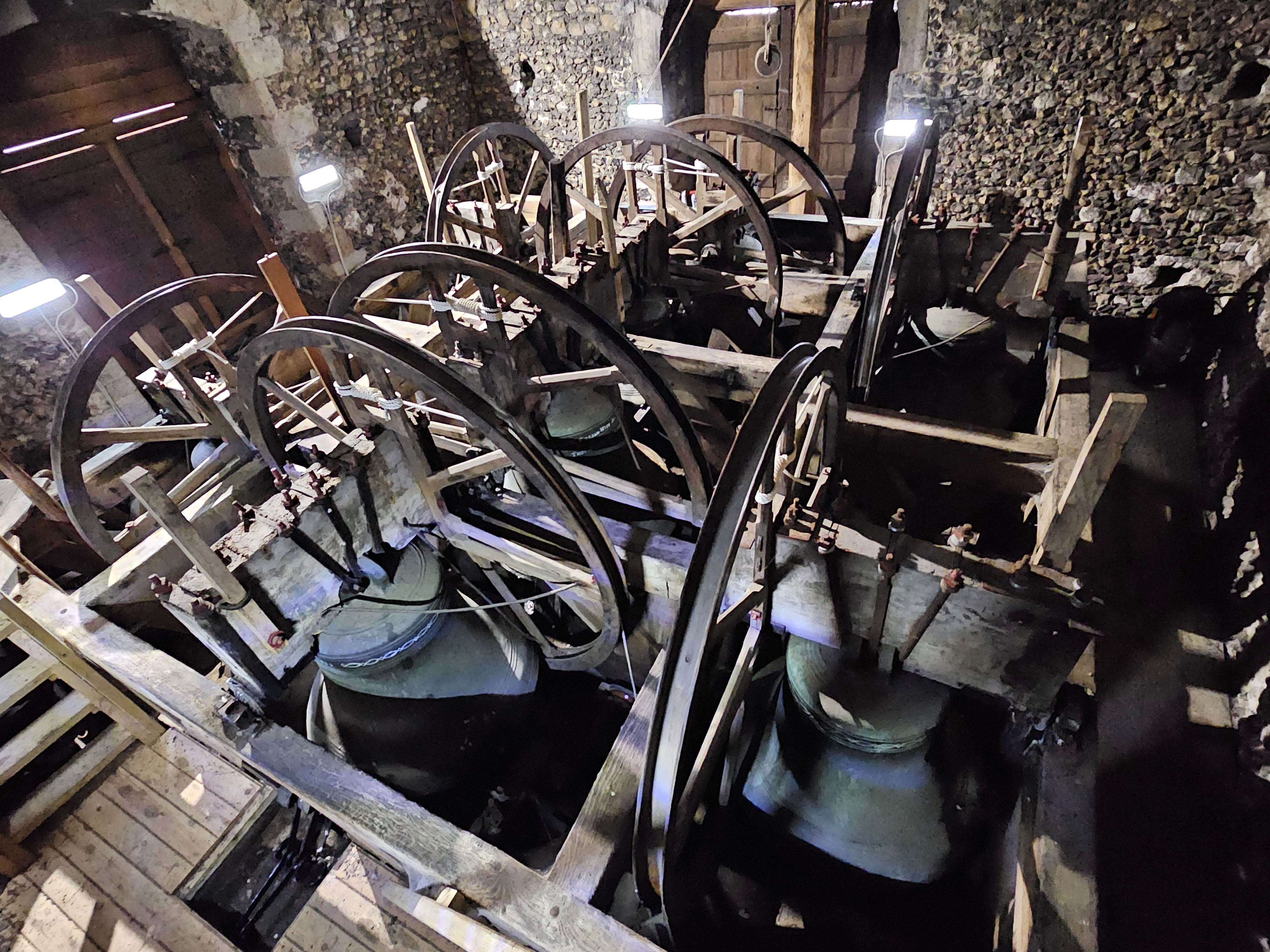
Photo: Dickon R Love, 11 May 2026
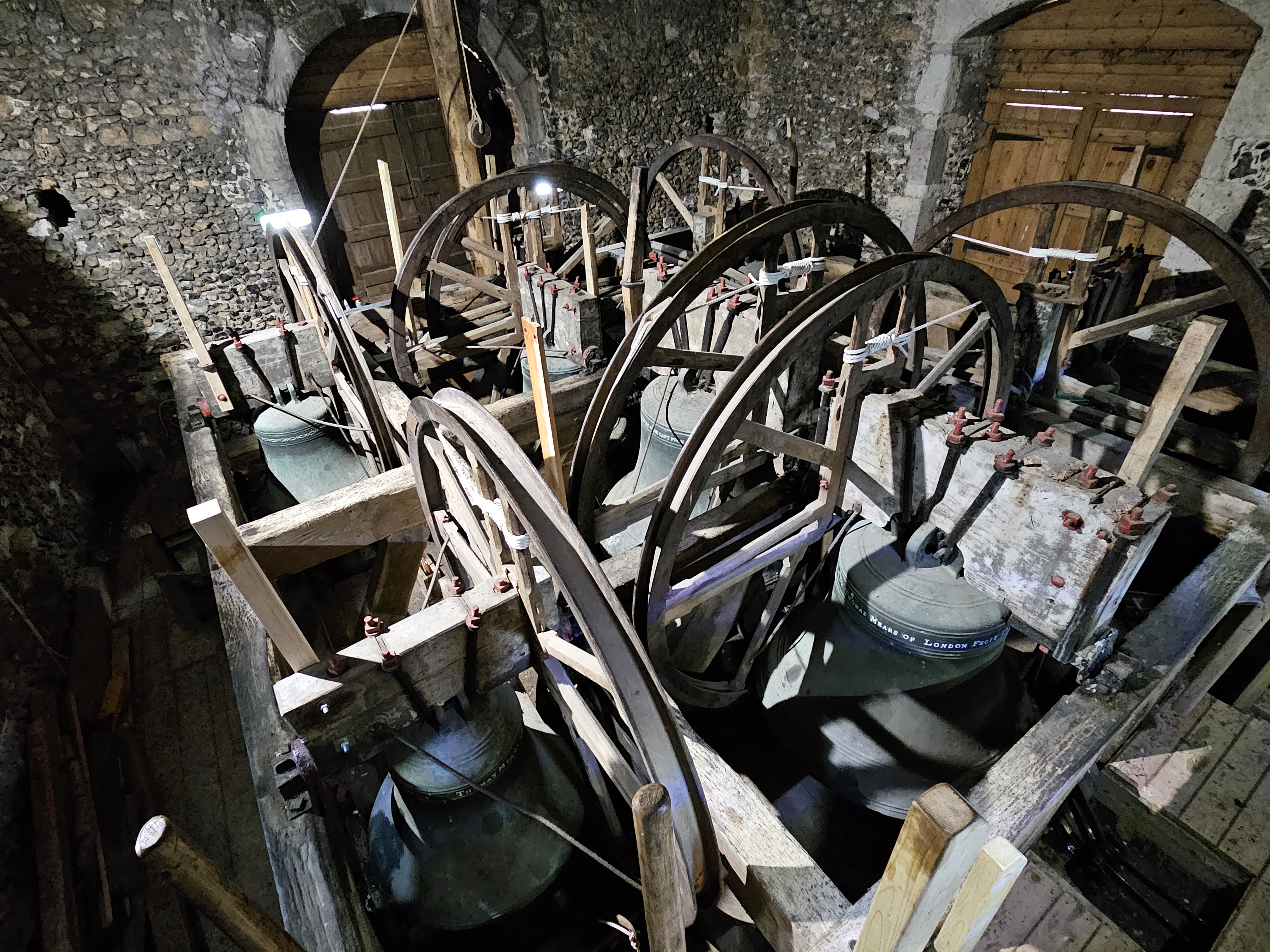
Photo: Dickon R Love, 11 May 2026
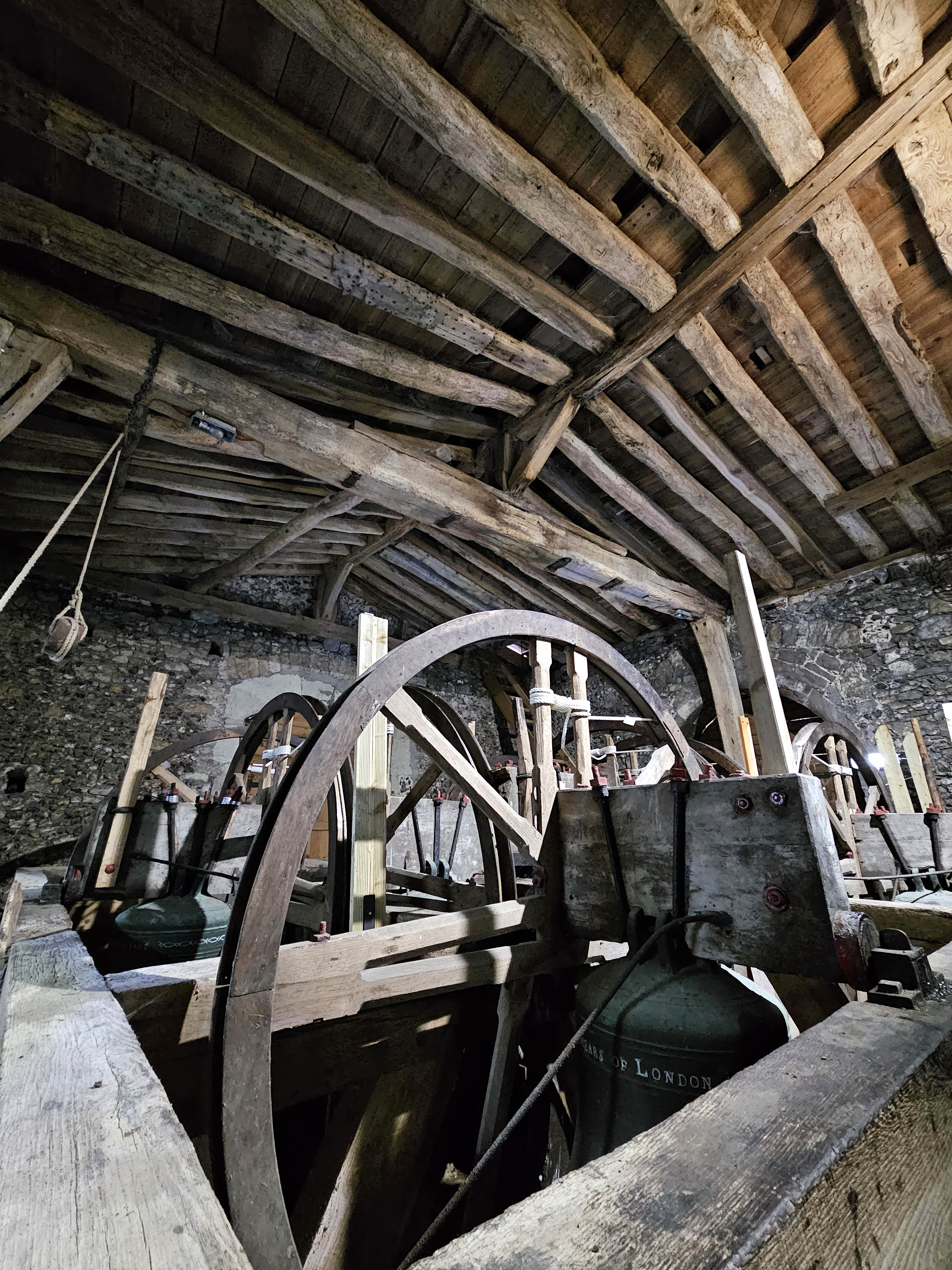
Photo: Dickon R Love, 11 May 2026
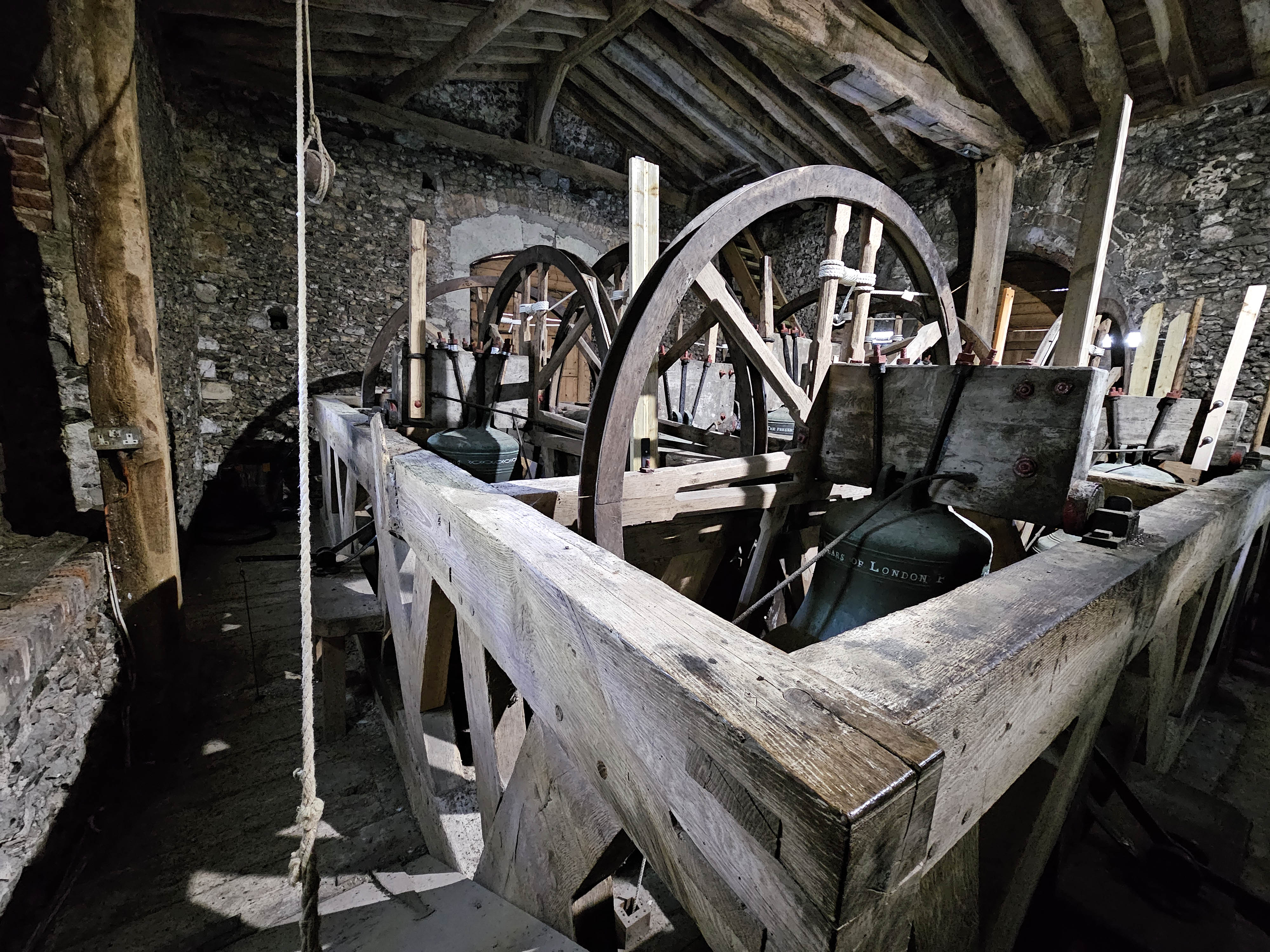
Photo: Dickon R Love, 11 May 2026
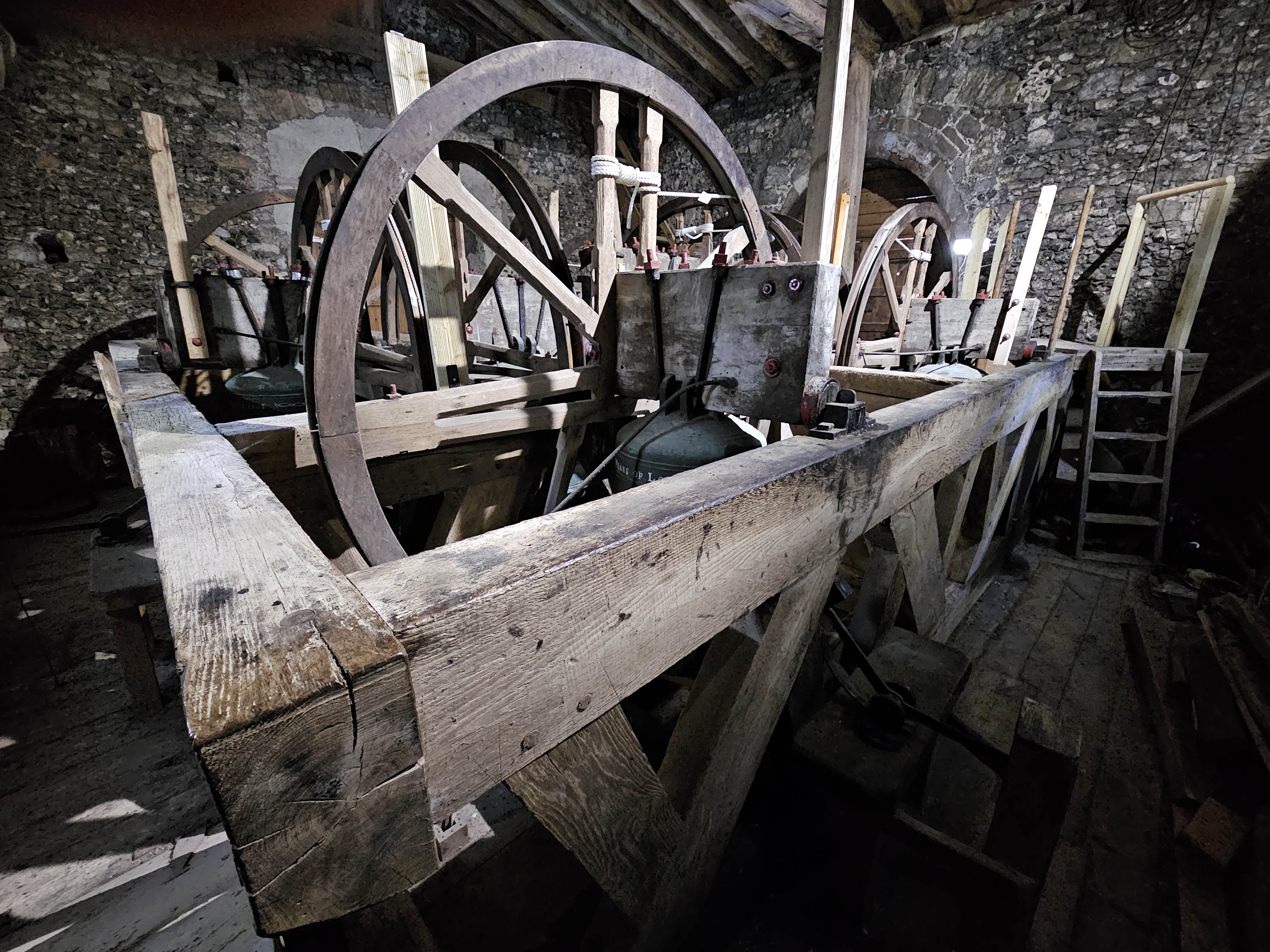
Photo: Dickon R Love, 11 May 2026
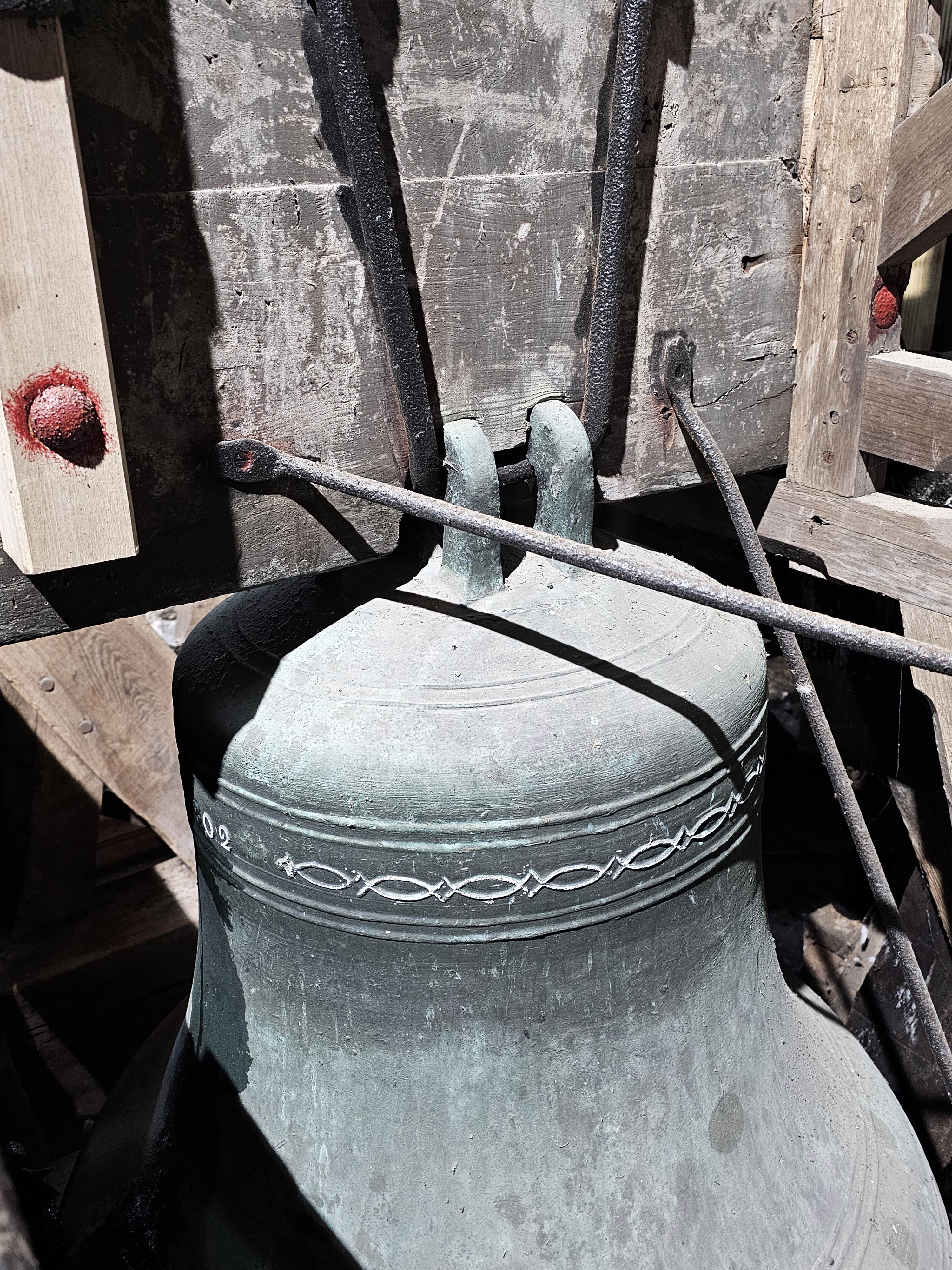
Photo: Dickon R Love, 11 May 2026
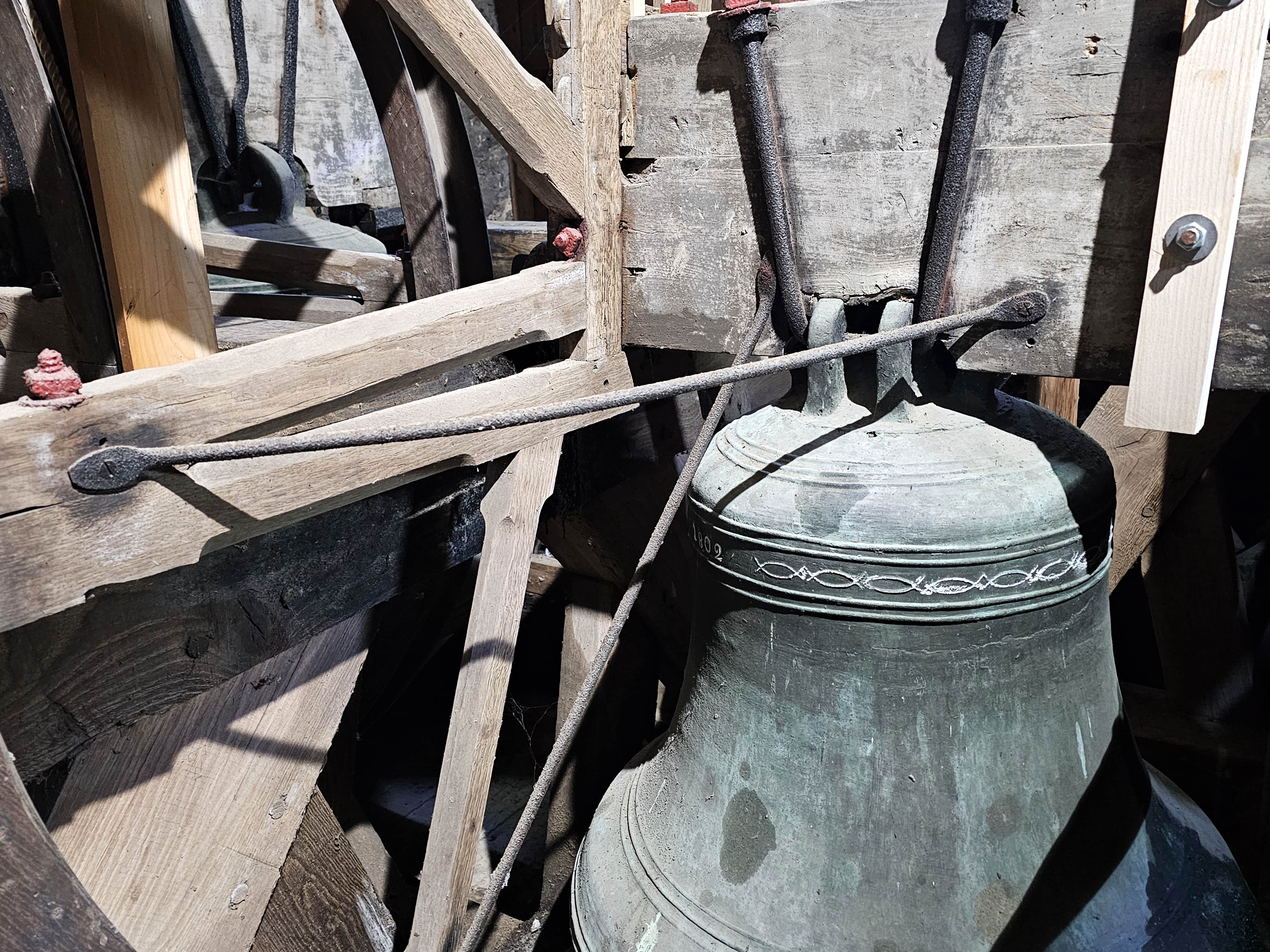
Photo: Dickon R Love, 11 May 2026
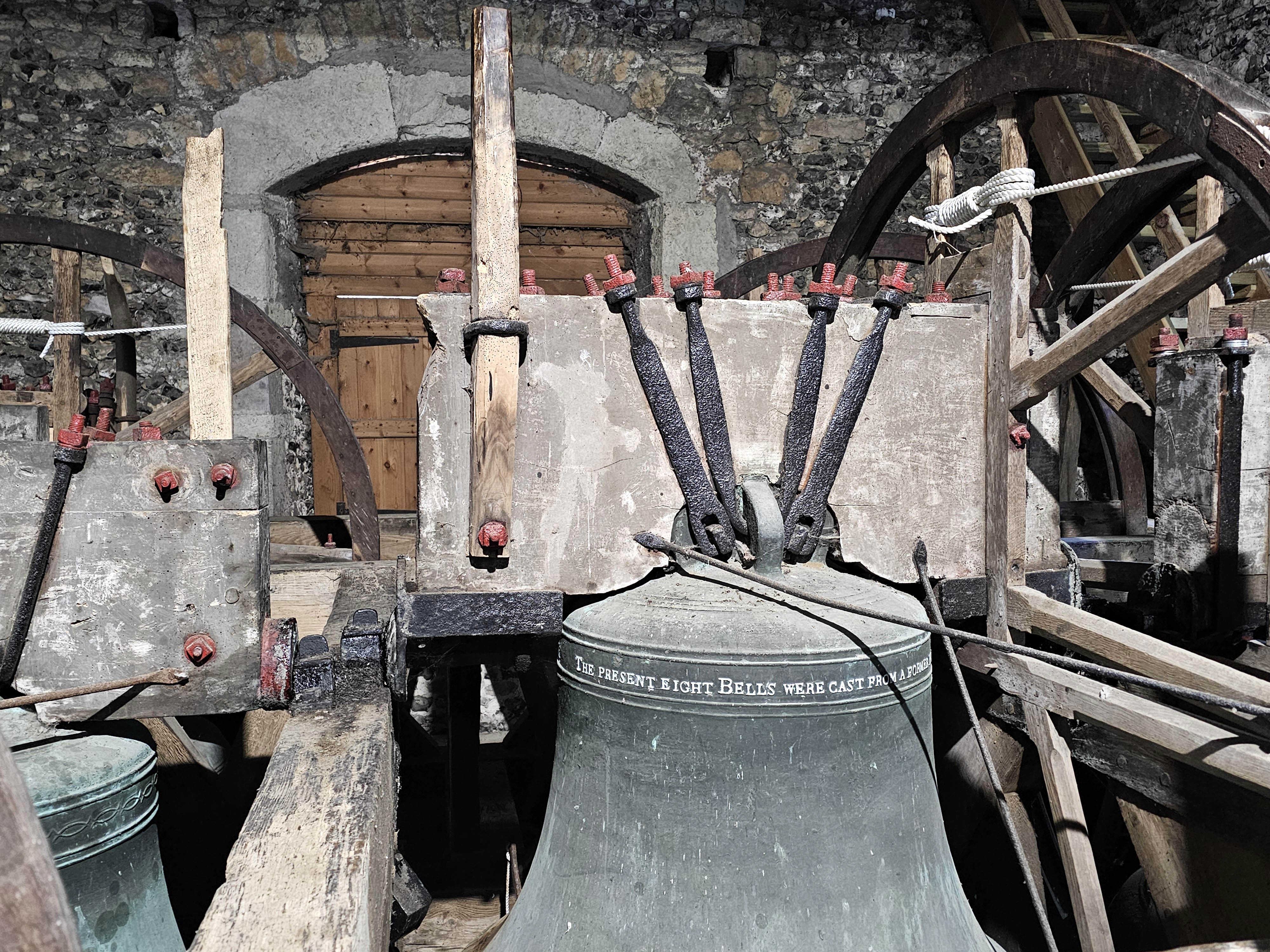
Photo: Dickon R Love, 11 May 2026
The ringing room
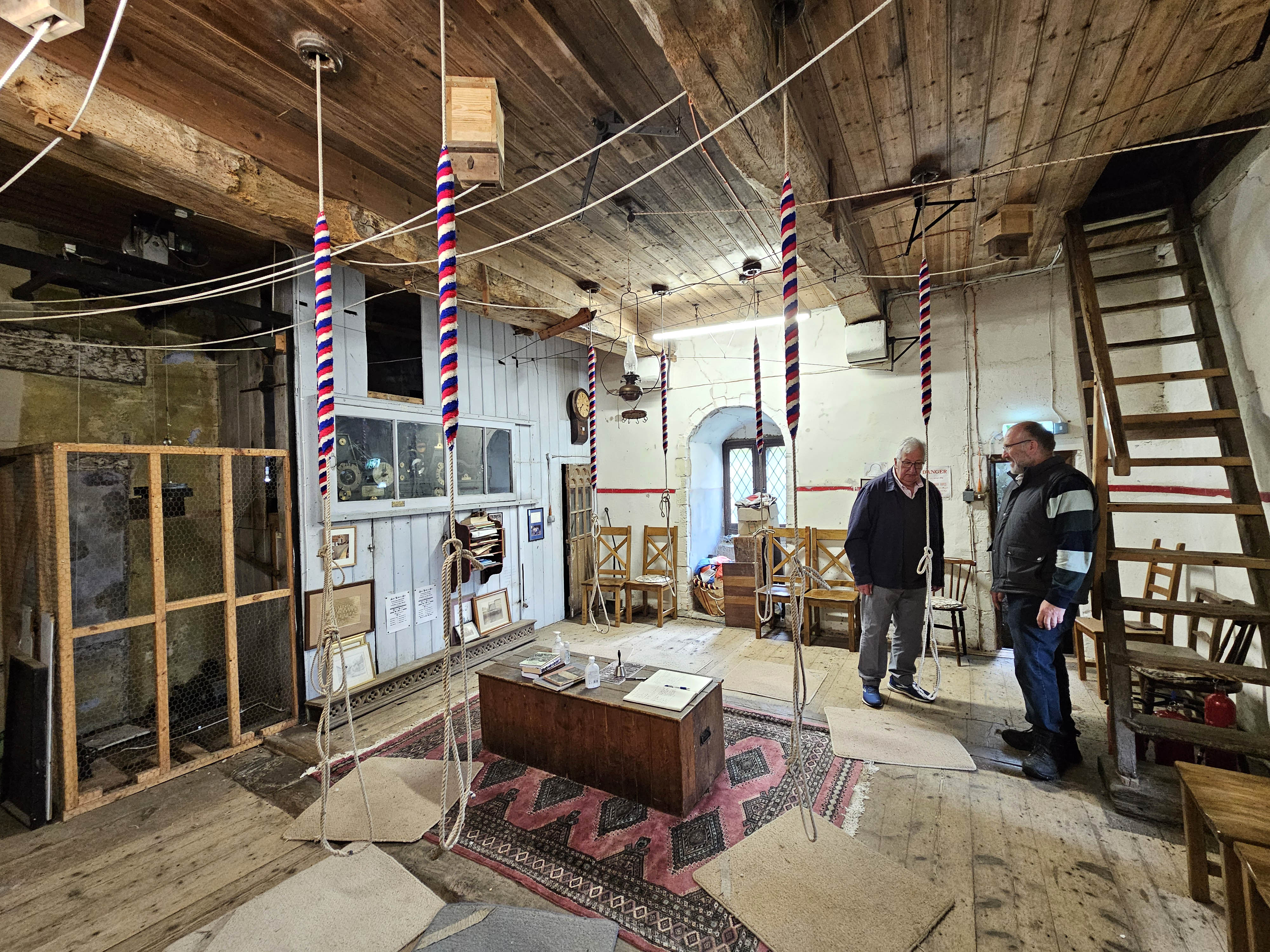
Photo: Dickon R Love, 11 May 2026
Peal boards
Timber Performance Board dated 1814

Photo: Christopher J Cooper, 1 May 2017

Photo: Christopher J Cooper, 1 May 2017

Photo: Dickon R Love, 11 May 2026
Timber Performance Board dated 1894

Photo: Christopher J Cooper, 1 May 2017
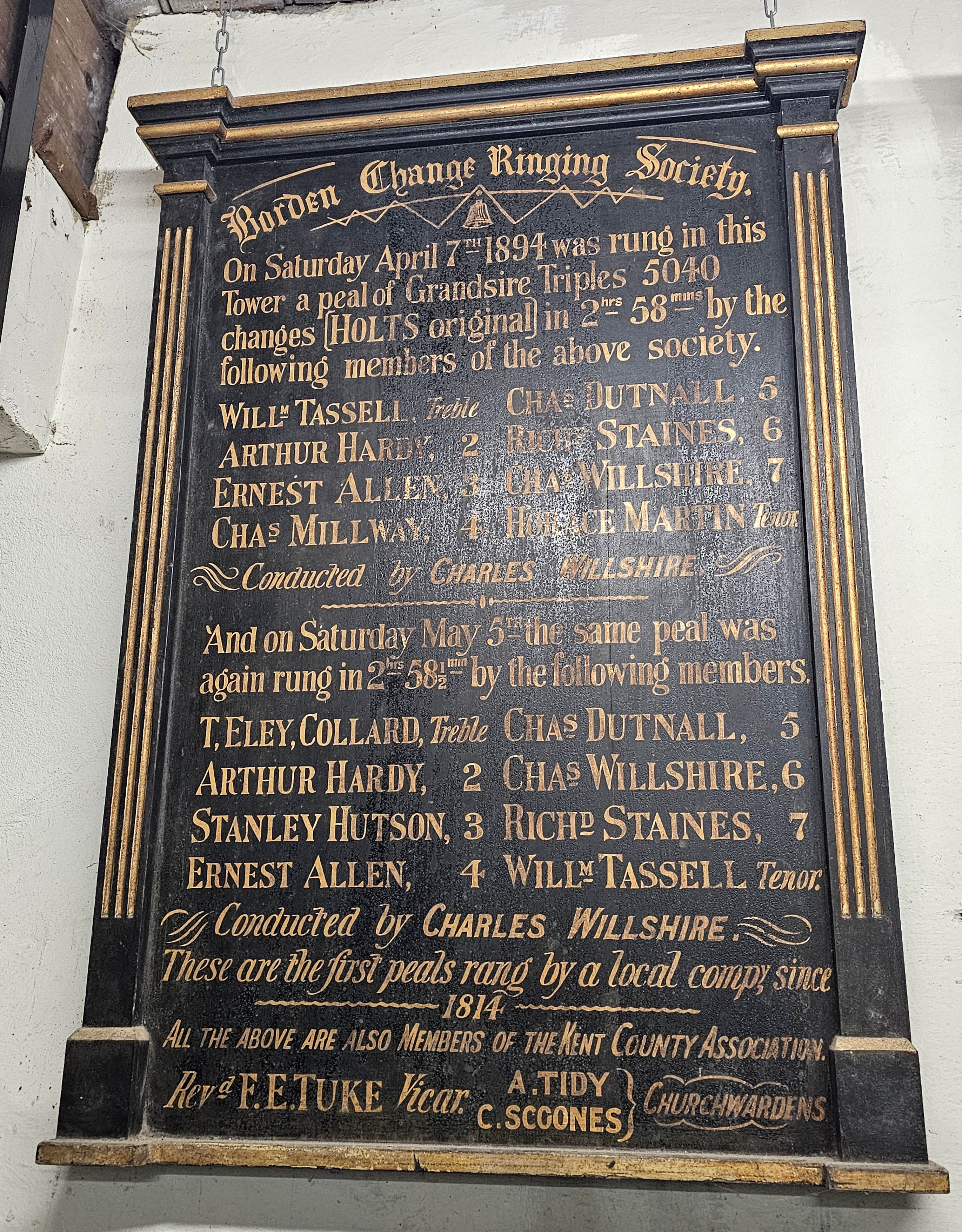
Photo: Dickon R Love, 11 May 2026
Timber Performance Board dated 1897

Photo: Christopher J Cooper, 1 May 2017
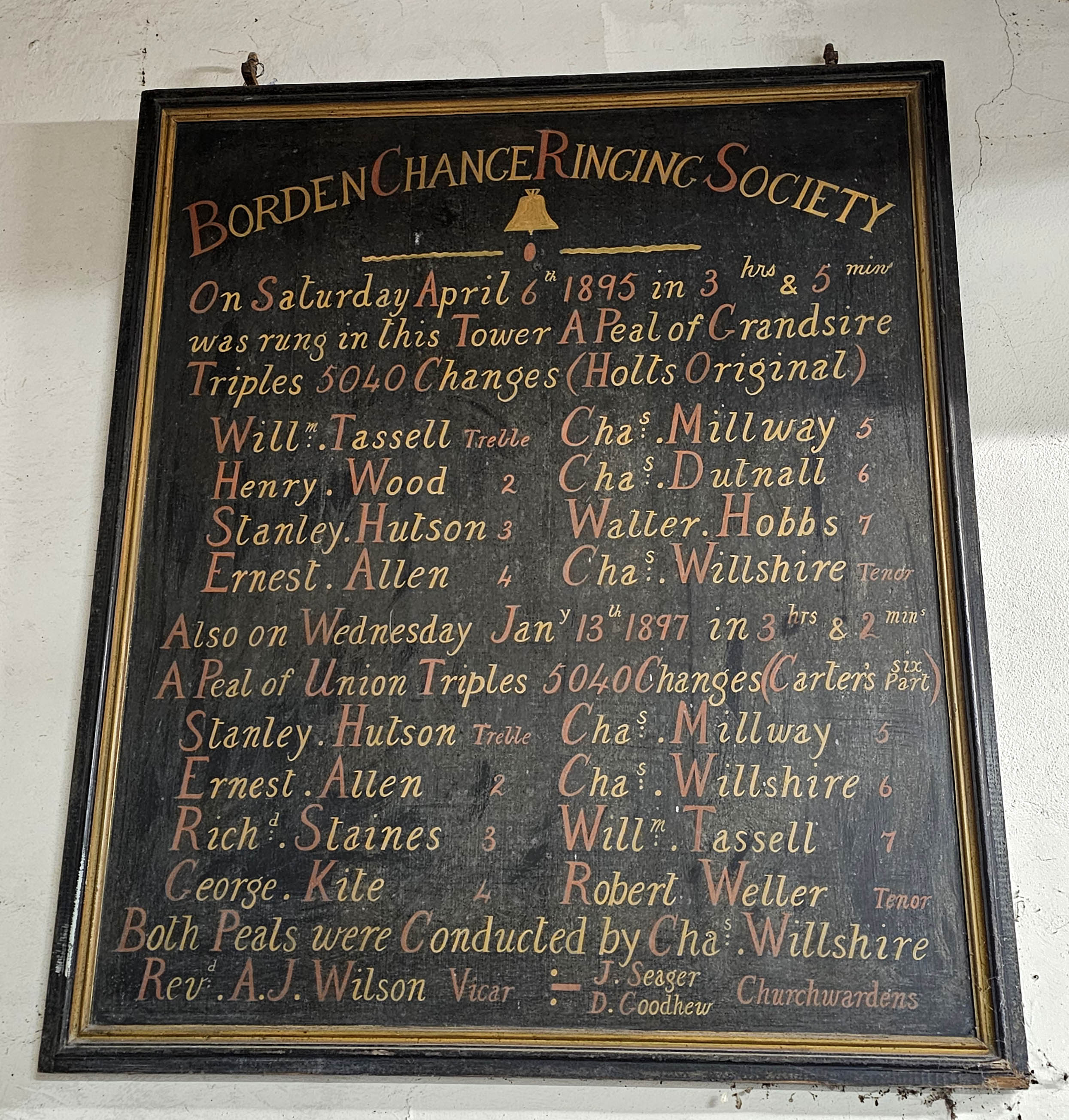
Photo: Dickon R Love, 11 May 2026
Timber Performance Board dated 1929

Photo: Christopher J Cooper, 1 May 2017
Timber Performance Board dated 2016

Photo: Christopher J Cooper, 1 May 2017
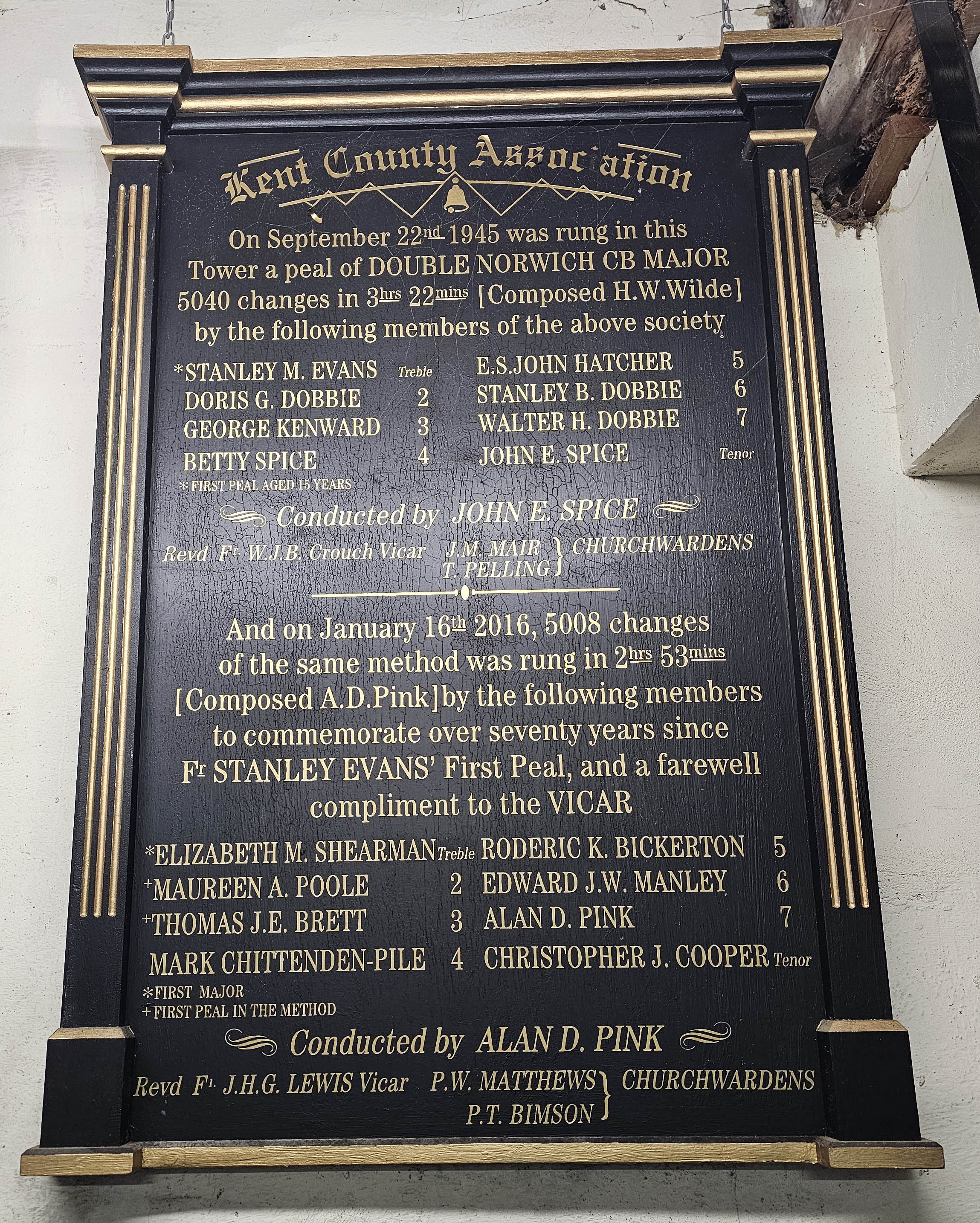
Photo: Dickon R Love, 11 May 2026
Page updated: 9 June 2026